
Nutrition Notes
Building a Vitamin D and Magnesium Stack: A Week of Observations
Marcus Chen · 10 February 2026 · 9 min
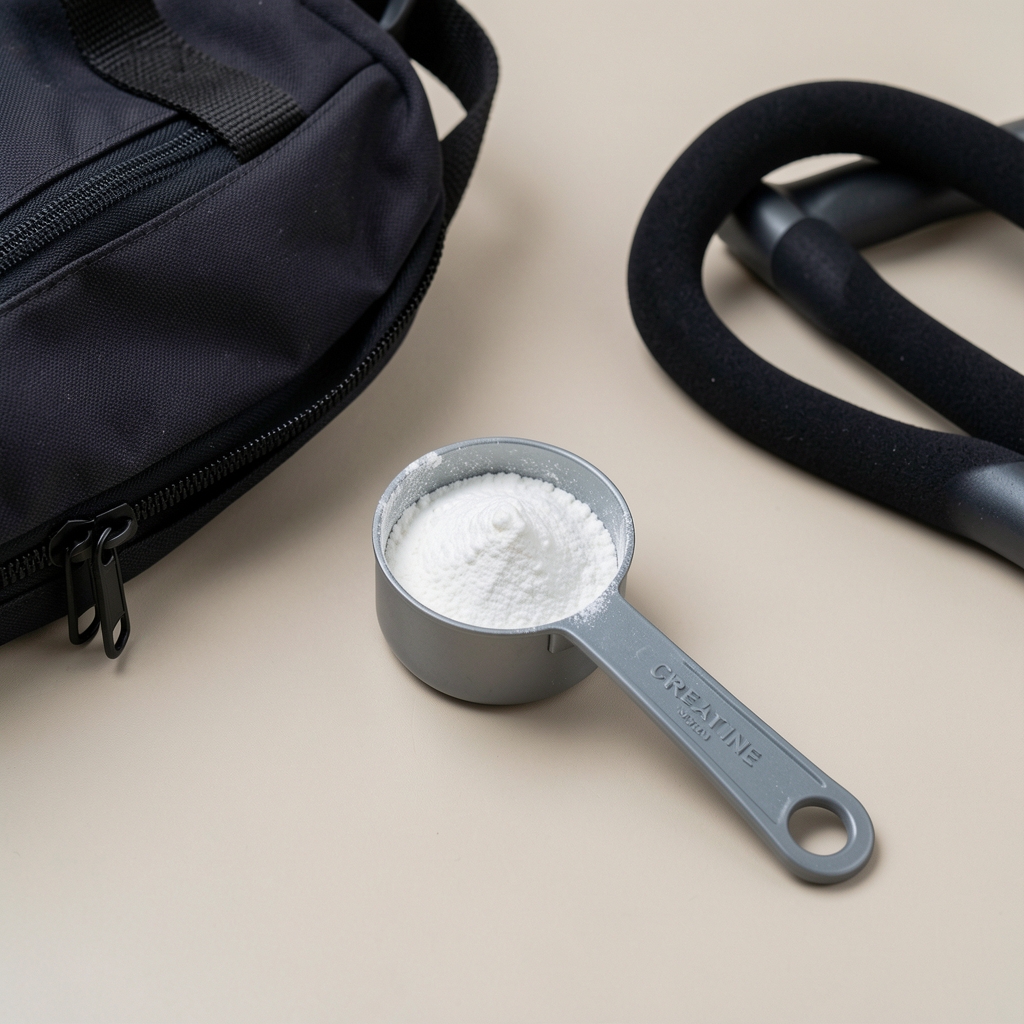
Creatine occupies a distinctive position in the men's supplement landscape. Unlike many nutritional supplements whose roles are discussed in broad, foundational terms, creatine has an unusually direct body of published research supporting its relationship with physical output in resistance training contexts. This editorial piece reviews that research from a neutral observational position, with attention to what the evidence actually describes — and what it does not.
The published nutritional research on creatine monohydrate is among the most extensive in the sport and exercise nutrition category. Study populations have included men across a range of activity levels, from recreational gym participants to competitive athletes, and the general finding across much of this research is consistent: creatine supplementation supports physical output over time in resistance training routines. This is particularly relevant to men who train with weights regularly, where the accumulation of training volume over weeks and months is the primary driver of physical development.
The mechanism described in the research literature involves the body's phosphocreatine system — creatine supplementation increases the phosphocreatine stores available during high-intensity activity, which contributes to the resynthesis of adenosine triphosphate, the primary energy source for short-burst muscular work. For men performing multiple sets of compound movements in a gym environment, this translates to a sustained capacity for physical output across the session, rather than a noticeable single-session effect.
Men new to creatine supplementation often encounter two approaches described in the research and in the broader nutritional literature: a loading phase, typically involving higher daily intake across the first week, followed by a maintenance intake; and a simpler single daily dose approach without loading. Both approaches are documented in the published research, and both appear to be effective over a longer observation window. The difference is primarily in the speed at which muscle phosphocreatine stores reach saturation.
For men whose supplement journalling habits prioritise simplicity and consistency over rapid saturation, the single daily dose approach — typically taken post-session or at any consistent daily time — is more compatible with building sustainable supplement stacking habits. The research supports this approach, noting that the saturation effect is achieved over a longer period but is equivalent in outcome. Orenav Journal's editorial position is that consistency of intake is more practically relevant than theoretical optimisation for active men building a daily supplement routine.

The framing of creatine in men's supplement reviews frequently centres on gym performance, but the published nutritional research is broader in its scope. Evidence exists for creatine's role in supporting physical output across a range of activity types — including sprint-based sport, cycling, and functional fitness patterns — as well as its contribution to muscle recovery rhythm after high-intensity physical activity. For men whose active lifestyle extends beyond structured gym sessions to recreational sport, outdoor training, or mixed-modality exercise, the relevance of creatine supplementation extends accordingly.
It is worth noting what the research does not describe: creatine is not represented in the peer-reviewed literature as an acute energy supplement in the manner of caffeine, nor does the research suggest its benefits are concentrated in a single session or short window of use. The observed contribution to physical output is a product of sustained daily intake over weeks of resistance training activity — a distinction that matters for men approaching supplementation with realistic expectations grounded in nutritional evidence.
"The value of creatine in a men's supplement stack is not in what it produces on any given Tuesday. It is in what it contributes to the cumulative record of physical output across a sustained training period."
Creatine and protein supplementation are frequently discussed together in men's supplement literature, though they operate through distinct nutritional mechanisms. Protein supports daily protein intake targets alongside whole foods — contributing to the repair and adaptation processes that follow resistance training — while creatine contributes to the energy availability that supports the training output in the first place. Together, they represent the two most research-supported nutritional supplements in men's gym nutrition, and their combination in a daily supplement stack reflects the most common pattern documented in men's supplement journals reviewed for this piece.
The editorial note worth adding here: neither supplement replaces whole food nutrition. The foundational principle documented consistently across the published research is that whole food first, supplementation as addition, remains the most nutritionally sound framing for men building active lifestyle supplement habits. Creatine from whole food sources — red meat, fish — contributes to baseline creatine stores even before supplementation is considered. Supplementation adds to this foundation rather than replacing it.
The published research on creatine monohydrate is significantly more extensive than on alternative forms, including creatine hydrochloride, ethyl ester, and buffered variants. While marketing for these alternatives frequently suggests advantages in absorption or stomach tolerance, the comparative research base for these claims is considerably smaller than the established literature on creatine monohydrate. For men making evidence-informed supplement choices, creatine monohydrate remains the form with the most comprehensive research support — a position consistently reflected in independent nutritional research reviews.
The practical implication for men building a supplement stack: creatine monohydrate is the appropriate default choice based on available evidence, and its cost relative to premium alternatives is significantly lower, allowing budget allocation toward other nutritional priorities in the stack — protein sources, omega-3 supplementation, or foundational vitamins including vitamin D and zinc.
For men already supplementing with vitamin D, magnesium, and protein powder as documented in the first article in this series, the addition of creatine represents a natural next layer in the daily supplement stack. The timing of creatine intake is more flexible than some supplement literature suggests: the research supports daily intake at any consistent time, and there is no compelling evidence that post-session timing is significantly superior to pre-session or morning intake when the daily dose is maintained consistently.
The practical note from supplement journalling experience at Orenav Journal: creatine mixed with water or a protein shake after a gym session is the most common integration point observed in men's active supplement habits. This timing works partly because it attaches the habit to an existing post-session routine, reducing the likelihood of a missed dose. Over a sustained period — the research typically documents effects across four to eight weeks of consistent daily intake — the physical output support becomes embedded in the training rhythm rather than functioning as an acute intervention.
One pattern observed consistently in men's supplement journalling accounts is the expectation of a noticeable single-session effect that does not materialise in the early days of creatine use. This expectation, which often originates in promotional rather than editorial supplement writing, can lead to early discontinuation before the cumulative nutritional effect has had time to develop. The research timelines are clear: the contribution to physical output that creatine supports in resistance training is documented over periods of several weeks, not days.
For men maintaining a supplement journal as part of their active lifestyle routine, recording training session outputs — weights used, sets completed, perceived effort — over the first six to eight weeks of consistent creatine use provides a more meaningful observational record than daily introspective notes. The evidence-informed approach to creatine journalling is a long-form record rather than an acute log.

Marcus Chen is the founding editor of Orenav Journal, focusing on men's supplement habits, nutritional awareness, and active lifestyle documentation. He is based in Jakarta, Indonesia.
More from this author: Vitamin D & Magnesium Stack